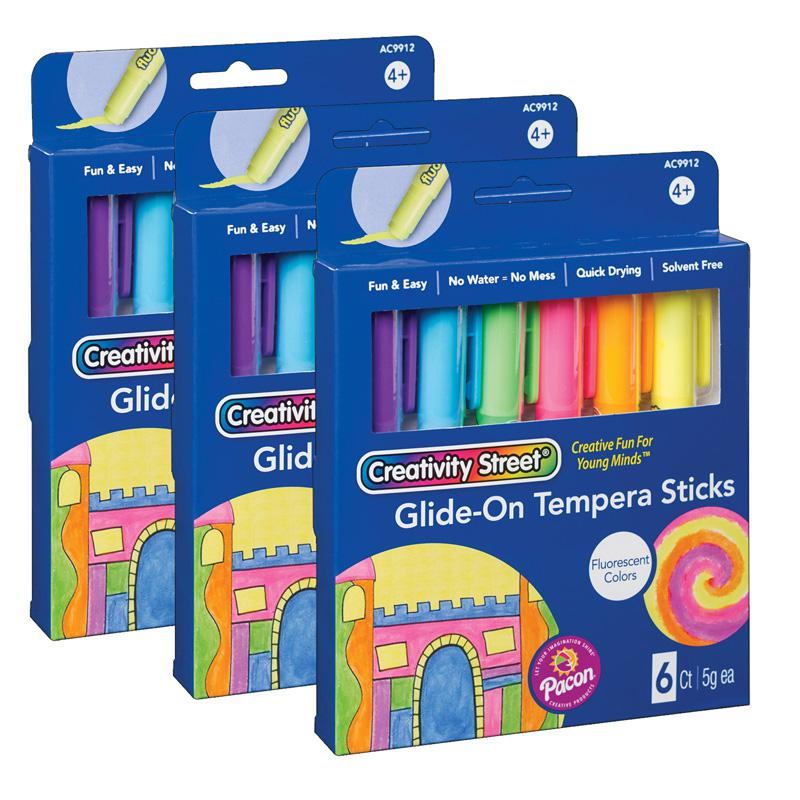
Add eye-catching brightness to creative projects with Glide-On Tempera Paint Sticks in bold fluorescent colors. Designed for smooth, direct application, these paint sticks glide easily across surfaces like paper, chipboard, plastic, and more without bleeding through or damaging the material. The vibrant pigments help artwork stand out, while the solid format reduces drips and keeps projects looking clean.
The twist-up barrel allows for controlled use, making it simple to access more paint as needed. Each stick can be applied directly or activated with a small amount of water for brush techniques, offering flexibility in how color is used. Certified non-toxic with the AP seal, this set includes three packs of six sticks for a total of 18 fluorescent paint sticks, providing a convenient supply for creative environments that value bold color and easy handling.
Quick answers to the questions we hear most. Don't see yours? Reach out to the team.
Paint sticks offer a more controlled application since the color is solid rather than fluid. This helps reduce spills and allows for more precise placement on the surface. They can also feel more similar to drawing tools, which some artists find easier to manage.
Fluorescent pigments are designed to appear vivid and highly visible, especially under strong lighting. Applying the paint in steady layers can help maintain that intensity. Letting the artwork dry fully supports color clarity.
Yes, adding a small amount of water to the paint on a palette allows it to be picked up with a brush. This approach can help create softer edges or blended effects. Using minimal water typically preserves the paint’s brightness.
Twisting the paint down and replacing the cap securely helps prevent the surface from drying out. Storing them in a moderate environment away from extreme heat or cold is recommended. Keeping them organized can also reduce accidental damage.
They can be layered once the initial application has set, helping build dimension in a piece. Applying lighter pressure often improves control when working over previous color. Testing layering on a spare surface can help determine the desired effect.